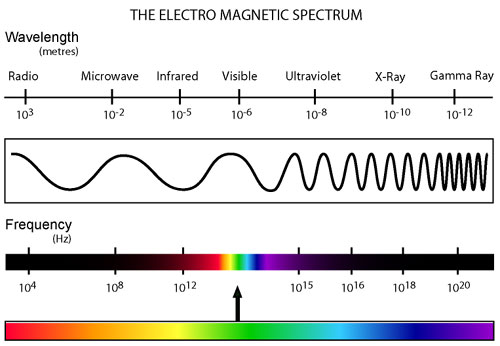
The radiation emitted from decaying nuclei is called ionizing radiation. This is because it is sufficiently high in energy to ionize essentially any element or compound that it interacts with. This is the essential danger of radioactive materials. They are constantly undergoing decay and emitting ionizing radiation. That radiation will interact with molecules in your body and kick off electrons. This will in turn lead to undesired chemistry in your body (bonds breaking, the formation of free radicals, ...). The effects of exposure to the radiation can acute and similar to the effects of UV-radiation (like a sunburn only much much worse). Or they could be long term such as an increased risk of the development of certain cancers.
There are three types of ionizing radiation that were classified with generic names before they were completely characterized. These initial terms of alpha, beta, and gamma radiation are still used despite the fact that we now know specifically what all three are.
Alpha radiation is a form of ionizing radiation that is associated with radioactive isotopes that undergo alpha decay. These isotopes decay with the emission of an alpha particle (He-4 nucleus).
Alpha particles have a very strong ionizing power (they are "missing" two electrons), but generally alpha radiation is easy to protect against since alpha particles have very little penetrating power due to their large mass. As such, they cannot pass through paper or even the dead layers of skin on a human body. However, alpha emitters can be very dangerous if they make their way into the body. In particular, alpha emitters in the lungs lead to damage (and later lung cancer) as they are in direct contact with internal organs.
Radon-222 is a radioactive gas that has a high natural abundance (it is a product of the decay of uranium). It is an alpha emitter and the greatest source of naturally occurring radiation exposure.
Beta radiation can be either negative (electrons) or positive (positrons). However, in general when people talk about beta radiation or beta particles they are talking about electrons (not positrons). Beta(-) particles are also a form of ionizing radiation (they will ionize molecules in your body) as they are very fast moving electrons. Positrons that are emitted rapidly encounter other electrons and annihilate in reaction that generates gamma radiation. Beta radiation is fairly easily shielded as beta particles have medium penetrating power. They will pass through paper (and skin) but not things like a few millimeters of metal (or most building materials).
Gamma radiation is extremely high energy electromagnetic radiation. Gamma radiation is associated with almost all forms of radioactive decay. As the EM radiation has no associated mass or charge numbers, it is often left out of balanced equations of nuclear change. However, it is a large way by which the energy of a nuclear change is released. Nearly all nuclear decays include emission of gamma radiation.
Gamma radiation has an extremely high penetrating power. Gamma rays will pass through not only paper (or skin) but also most building materials. Effective shielding of gamma rays requires large amounts of thick shielding with heavy metal elements (such as lead). As such, it is very difficult to protect against gamma radiation.
Because gamma radiation is ubiquitously associated with radioactive decay and it the most difficult to shield against, it is the source of most of the damage from radiation. If you have radiation sickness from exposure to radioactive materials, it is almost certainly from gamma rays.
© 2013 mccord/vandenbout/labrake